
Beyond Compliance: Why Your Company Needs Both Corporate Carbon Footprint (CCF) and Product Carbon Footprint (PCF)?
 Dec 30,2025
As sustainability champions in Malaysia, we are navigating a rapidly shifting landscape. Between Bursa Malaysia’s ESG reporting mandates staged between 2025 and 2027, increasing pressure from international supply chains, and the looming introduction of carbon pricing, the focus has shifted from “Why should we measure carbon?” to “How do we measure it effectively?” You might be familiar with the Corporate Carbon Footprint (CCF). But is that enough? To truly decarbonize, we also need to talk about the Product Carbon Footprint (PCF).
Think of it this way. One is your organization’s annual health check-up, while the other is the nutrition label on the products you sell. Here is how they work together to drive real business value.
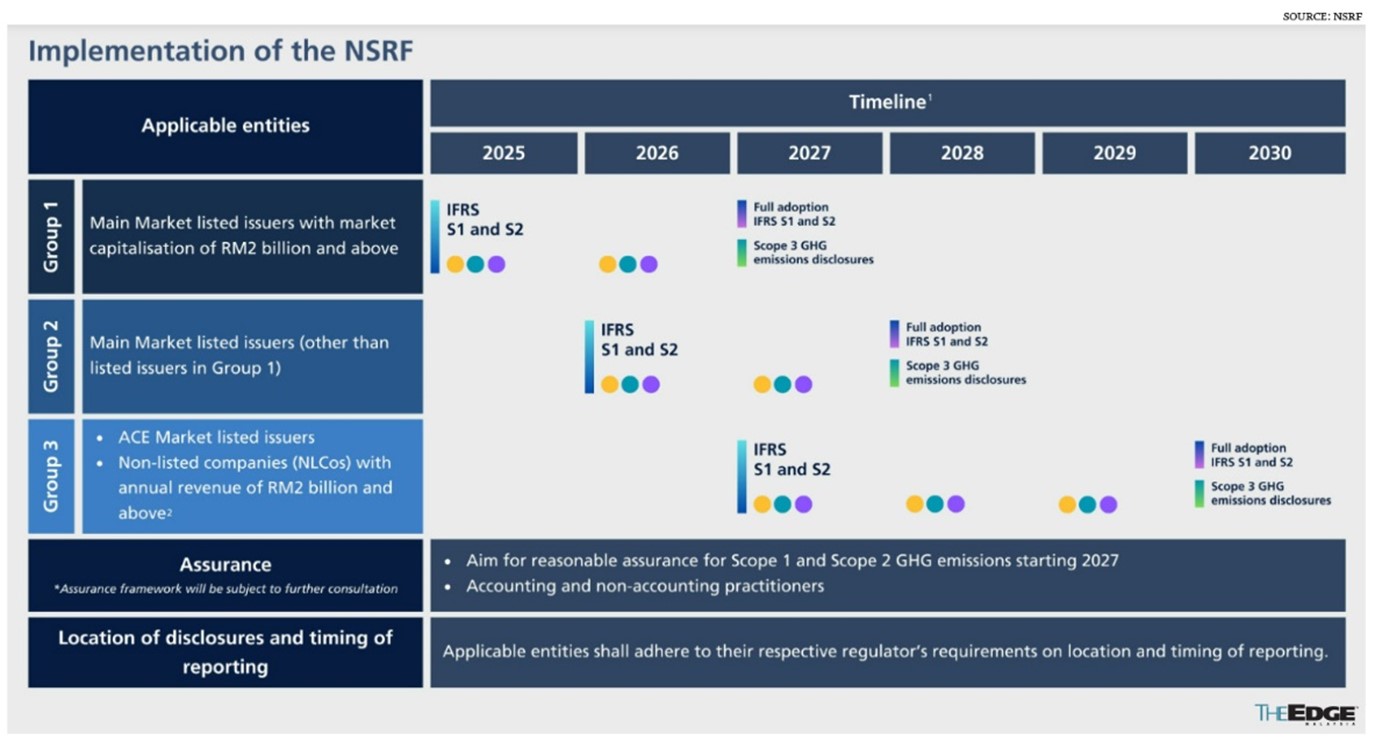
The CCF – Your Annual Health Check-Up
The CCF is the macro-level view. Just as a medical check-up assesses the overall health of a patient, the CCF quantifies greenhouse gas (GHG) impacts across your entire organization over one year.
It groups emissions into three well-known 3 scopes as shown in the diagram below.
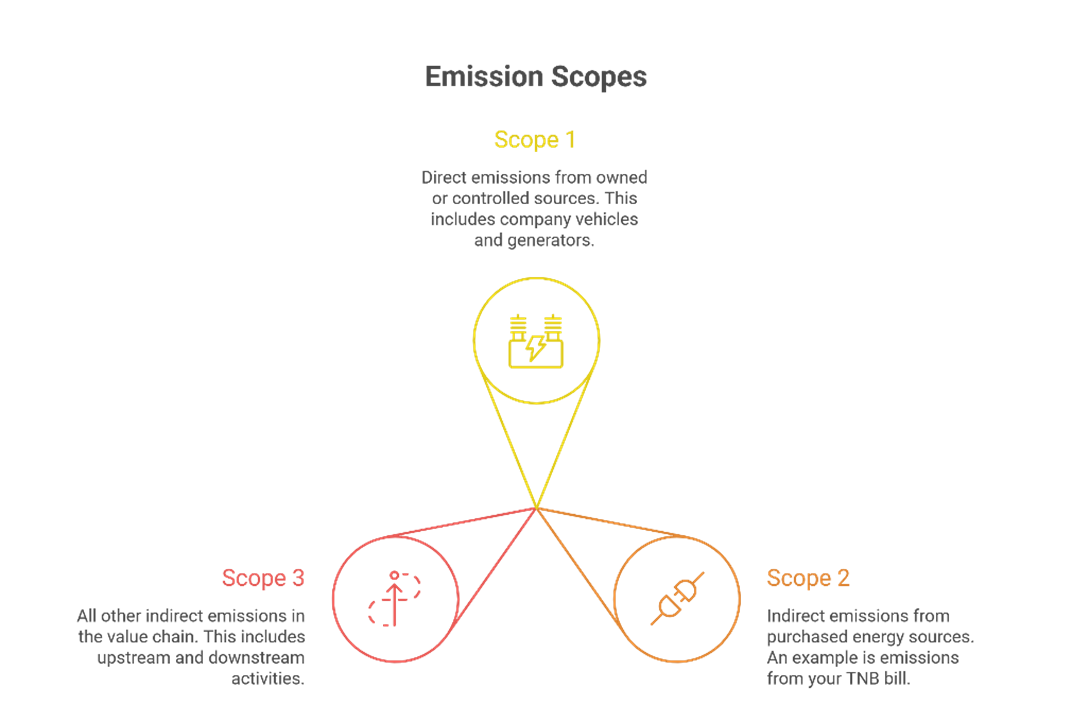
Why it matters: This “health check” helps your management develop high-level strategies. It identifies which parts of the business are “at-risk” and helps you report to stakeholders like investors or regulators. It answers the big question: “How much do we emit overall?”
The PCF – The Nutrition Label
If the CCF is the health check, the PCF is the detailed Nutrition Label for a single good or service.
This micro-level assessment follows a specific product’s life cycle, usually “cradle-to-grave.” It meticulously tracks impacts from raw material acquisition & pre-processing (like harvesting palm oil or mining silica), through production and distribution & storage, all the way to consumer use and disposal or recycling. For B2B manufacturers where the final use is unknown, a “cradle-to-gate” approach is used.
Why it matters: This “labelling” provides the transparency needed to make informed choices. It answers the operational question: “What specifically can we change in this product to make it greener?” By identifying hot spots in your specific product lines, be it a raw material or a logistics route, and fixing them, you automatically drive down your organizations overall Scope 3 emissions. Also, in a crowded market, a lower carbon score is your new competitive advantage. Just as health-conscious consumers compare sugar content, B2B buyers and eco-conscious consumers are increasingly choosing products with verified lower carbon intensities over grey alternatives. A PCF allows you to prove your product is the greener choice, turning sustainability into a premium differentiator. Besides that, the Carbon Border Adjustment Mechanism (CBAM) has been introduced by the European Union (EU) to promote lower carbon production in countries outside of the EU. It places requirements on importers of certain goods (currently Iron & Steel, Aluminum, Cement, Fertilizer, Electricity and Hydrogen) to report emissions from their production and ultimately pay a carbon tax on those emissions. For Malaysian exporters to export effectively to the EU, PCF data offers a strong data foundation for CBAM reporting by providing an understanding of a product’s emissions hotspots (Scopes 1 and 2, plus specific precursors).
The Shared Foundation
Despite the difference in scale, both assessments are built on the same rigorous foundation. Both were developed by the GHG Protocol and adhere to five key accounting principles: Relevance, Accuracy, Completeness, Consistency, and Transparency. CCF is well defined in GHG Protocol Corporate Accounting and Reporting Standard (2004) and GHG Protocol Corporate Value Chain (Scope 3) Accounting and Reporting Standard (2011) whereas guidance for PCF is provided in the GHG Protocol Product Life Cycle Accounting and Reporting Standard. The Product Standard builds on the framework and requirements established in the ISO LCA standards (14040:2006, Life Cycle Assessment: Principles and Framework and 14044:2006, Life Cycle Assessment: Requirements and Guidelines) and PAS 2050.
They both track the same six major greenhouse gases, which includes CO2, CH4, N2O, SF6, PFCs, and HFCs, and rely on data collection from your suppliers. They are designed not to compete, but to complement each other.
Hitting the Wall – Why CCF Isn’t Enough
A common pitfall we see in Malaysian organizations is “checking the box” or “complying with minimum requirement” with a CCF and stopping there.
While a CCF earns you a “seat at the table” regarding compliance, it often lacks the granularity to drive actual reductions. When your R&D or procurement teams try to redesign a product or choose between suppliers, corporate-level data will cause them to hit a wall.
Only a PCF breaks through these limits by allowing you to:
- Compare Ingredients – Calculate the emission difference between using palm oil vs. soybean oil, or recycled plastic vs. virgin plastic.
- Evaluate Suppliers – Select vendors based on their specific carbon performance rather than generic industry averages.
- Pinpoint Hotspots – Determine if the problem is the packaging, the logistics, or a specific raw material.
How CCF sets up the foundation for PCFs?
CCF provides the strategic foundation for the PCF by identifying priorities, establishing data systems, and mapping risks.
- Identifying Hot Spots for Prioritization
CCF provides a high-level map of where emissions are concentrated across the entire organization. By conducting a corporate inventory (specifically Scope 3), a company can identify products or product categories that are the most GHG intensive. This macro view allows management to focus their limited resources on creating PCFs for the specific products that have the greatest potential for significant reductions.
- Building the Data Infrastructure
Developing a CCF and PCF in parallel creates significant business value and efficiency because they rely on common data.
- Supplier Engagement – A CCF requires engaging with suppliers to understand value chain impacts. This initial outreach sets up the communication channels and data-sharing agreements necessary to later collect the highly granular, process-specific data required for a PCF.
- Internal Systems – Building a CCF first creates a strong foundation. It ensures you have the right data, systems, and quality checks already in place. Since you can reuse this same framework for your PCF later, you avoid doing the same work twice.
- Macro Risk Assessment
A CCF identifies emissions-related risks, such as potential carbon taxes, supply chain interruptions or changing consumer preferences, at the corporate level. Understanding these macro risks helps a company decide which products are strategically important to defend or redesign. This risk analysis ensures that when a company moves to the PCF stage, it is improving products that are critical to its long-term competitive advantage.
Summary: Strategy vs. Action
| Methodology | CCF | PCF |
|---|---|---|
| View | High-level, companywide. | Granular, process/ingredient-level. |
| Primary Use | External reporting (Bursa, GRI, SBTi) and corporate strategy. | Product development, eco-labelling, supplier selection, CBAM foundation |
| Data Needs | Operational data (Total energy, fuel, spend). | Recipes, Bill of Materials (BOM), packaging specs. |
From Complexity to Clarity: Your Partner for the Journey
Managing Scopes 1, 2, and 3 is already a significant undertaking. As we’ve seen, moving from CCF to a granular PCF is a maturity journey. You cannot build a sturdy building without a solid foundation. To eventually unlock the competitive advantages of PCF, you first need a robust, auditable, and streamlined CCF.
This is where Scout360 comes in.
We function as the reliable partner behind your sustainability journey, helping you master the macro before you tackle the micro.
- Master Your Health Check – We streamline your corporate reporting today, simplifying the heavy lifting of data collection and management so you can report to Bursa, investors, or clients with total confidence.
- Prepare for the Future – Sustainability standards are evolving, and so are we. By centralizing your data and establishing a rigorous baseline with Scout360 now, you lay the essential groundwork needed to tackle product-level intensity and complex supply chain risks in the future.
We are not just a software developer; we are the partner that grows with you as you advance from compliance to competitive advantage.
Ready to build your foundation?
The journey to net zero is a marathon, not a sprint. The most important step is getting your baseline right.
Would you like to schedule a demo to see how Scout360 can simplify your current corporate reporting and prepare your data for what’s coming next?

 Feb 25, 2026

