As landfill development becomes increasingly expensive, Malaysia is under pressure to accelerate the transition toward a circular economy. A useful reference on the country’s direction is the Circular Economy for Solid Waste Blueprint 2025–2035 issued by the Ministry of Housing and Local Government (KPKT). Among the proposed initiatives, one policy stands out: the Pay-As-You-Throw (PAYT) scheme.
PAYT
What Is PAYT?
PAYT is a charging mechanism where waste generators pay according to the actual amount of waste they dispose of rather than a flat monthly fee. The principle is straightforward: the more you throw, the more you pay. This places direct responsibility on waste generators and rewards organisations that reduce, reuse and recycle. The broader aim is to lower the volume of waste sent to landfills and support Malaysia’s circular economy goals.
This initiative will be driven by KPKT, with state governments and local authorities managing the rollout from 2025 to 2035. The PAYT framework signalling a major shift in how businesses budget for waste management. While waste management has long been a national concern, this marks a stronger government commitment to waste reduction and material recovery.
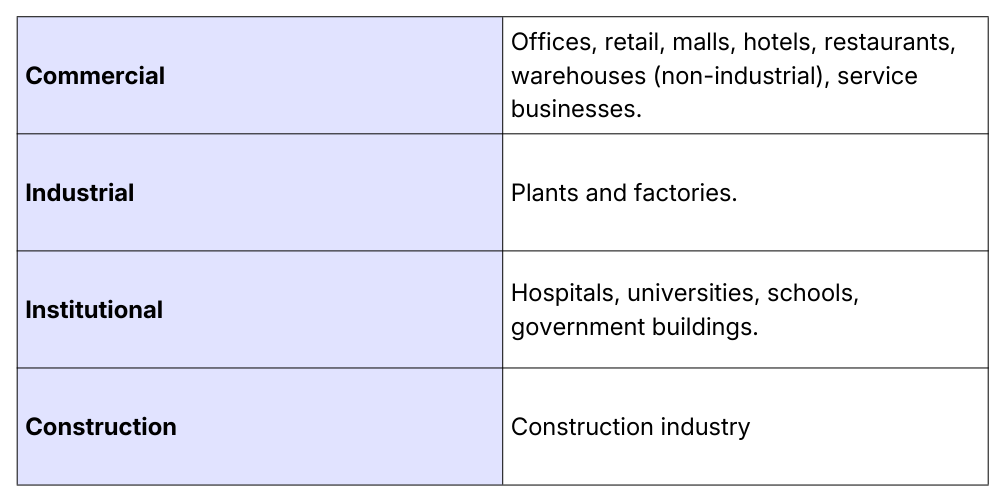
Who will be impacted by PAYT?
The PAYT scheme is expected to cover a wide range of sectors, including:
How Will PAYT Change Waste Disposal?
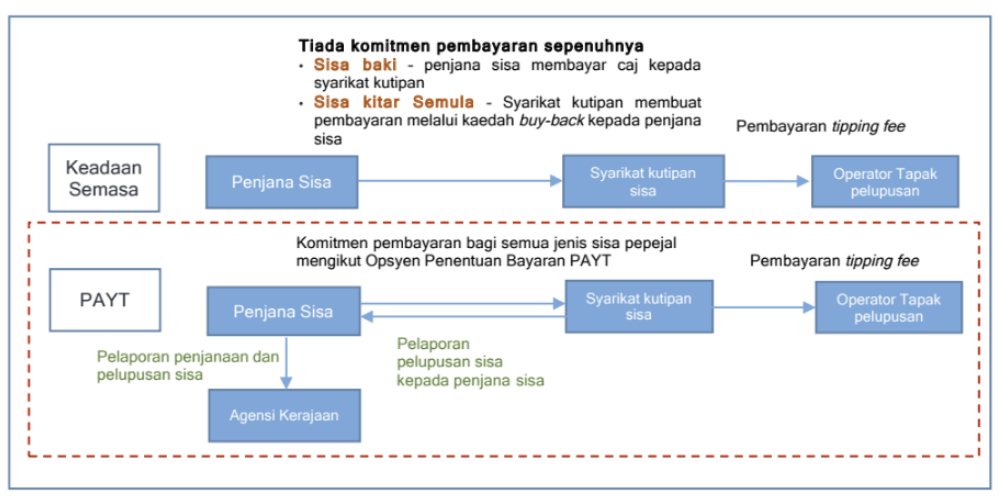
Currently, waste disposal follows a simple model. Waste generators pay a fixed rate per trip. Waste collectors transport the waste and pay a tipping fee at the landfill. If recyclables are segregated, they may provide some financial return through recycling companies.
Under PAYT, this fixed-fee model will be replaced with weight-based charging. This shift is at the core of the PAYT scheme, as businesses will now see waste disposal expenses fluctuate based on the waste they generate. Waste collectors will need to provide accurate weight data for each collection, and waste generators must report this data to relevant authorities.
How Can Businesses Prepare?
Since disposal charges will soon be tied to waste generation, organisations need to begin reducing waste at the source.
Segregation is the first essential step. Effective recycling programmes depend on proper waste separation. Once waste is segregated, recyclables such as paper, plastic, glass, aluminium and e-waste can be sold. Organic waste can be valorised through composting, fermentation, pyrolysis or gasification. Even scheduled waste, such as spent engine oil, can be recycled through licensed facilities. None of these opportunities are possible without accurate sorting and identification.
The second strategy is waste reduction through substitution and elimination. Use electronic documentation instead of printing. Encourage staff to bring reusable mugs and tumblers. Once segregation is in place, your waste composition becomes clearer, making it easier to prioritise which streams to reduce first. As Pareto’s principle suggests, focusing on the top 20 percent contributors often delivers the largest reduction.
Implementing these steps early will help soften the cost impact of PAYT scheme towards your organization, especially for high-waste sectors such as hospitality, manufacturing and construction.
Proposed Implementation Methods
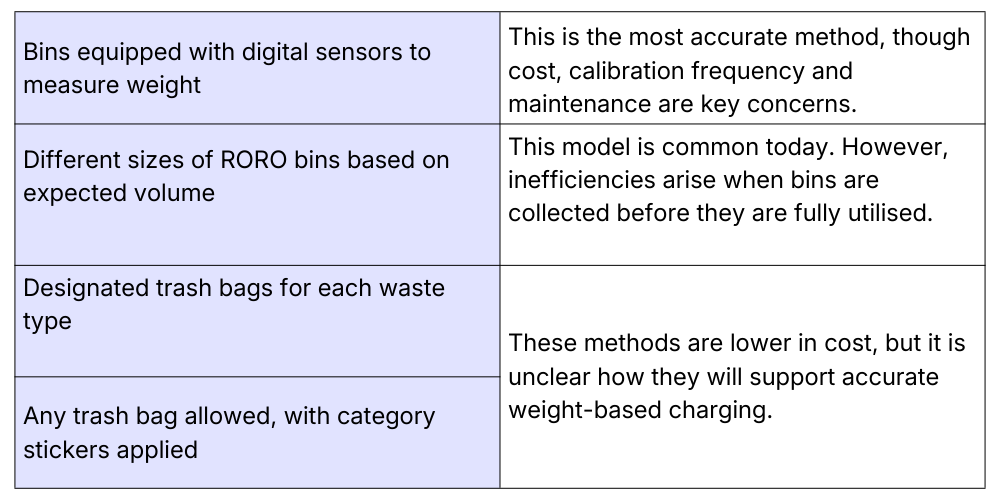
The blueprint outlines several possible PAYT pricing approaches:
Final Thoughts
The PAYT scheme is a bold attempt to modernise Malaysia’s waste management ecosystem. However, the operational model and enforcement approach remain unclear. Without clear execution and strong oversight, PAYT risks facing similar challenges to past mandatory segregation policies.
Still, the message to businesses is clear. Waste management will soon carry financial consequences, and those who act early by reducing, segregating and valorising waste will be better positioned to manage the cost impact of PAYT scheme and remain competitive. This is why in Scout360, our software also covers the waste management topic in detail, ensuring proper tracking of waste generation and mitigate your organization’s financial risk.
 Dec 05,2025


 Feb 25, 2026

